
Season is central to the art of the Japanese table. Kaiseki (懐石), or kaiseki-ryōri (懐石料理), is a formal Japanese meal served as a carefully sequenced progression of seasonal courses. Few dining traditions express seasonality so vividly– fresh ingredients and serving vessels are chosen together to reflect the time of year. A plate, bowl, or sweet container can evoke a landscape and its associations, bringing them to the table. Chefs carefully select works by Japanese makers that convey the seasonal imagery they wish to bring into dialogue with their cuisine.
Traditional calendars divide the year into 24 solar terms and 72 micro-seasons, encouraging close attention to subtle changes in nature. Autumn motifs include maple leaves, ginkgo, and the harvest moon; winter brings snow, bamboo, and cranes. In kaiseki, such imagery does more than decorate a vessel: it helps establish the mood of a course and connect the diner to the season.

Wakao Toshisada 若尾利貞, Gray Shino round plate -Reeds-, 丸皿,2008, With signed wood box, signed at the back Gray feldspar and white feldspar glazed stoneware; 1 3/4 × 10 in. (4.45 × 25.5 cm)
A round plate depicting a rising half-moon, for example, may evoke Otsukimi (お月見), the custom of viewing the autumn harvest moon, typically celebrated in September. A Nezumi Shino plate by Wakao Toshisada depicts a large moon above river reeds, recalling the quiet days before the autumn equinox. Chrysanthemums also mark this season. Celebrated on September 9 during Chōyō no Sekku, the flower symbolizes wishes for health and longevity. On Takiguchi Kiheji’s warm, earthy Kiseto plates, chrysanthemum imagery suggests both autumn’s abundance and the approaching winter.
Poetry and painting offer another way to read seasonal ceramics. In episode 106 of The Tales of Ise, a poet marvels at the Tatsuta River, its waters dyed red by autumn leaves:
「ちはやぶる神代も聞かず竜田川 からくれなゐに水くくるとは」
“Even in the age of the gods, who had heard of the Tatsuta River dyeing its waters deep red?”

Kakurezaki Ryuichi 隠崎隆一 Bizen leaf-shaped plate With signed wood box, signed artist mark on the bottom Stoneware 2 1/4 × 13 7/8 in. (5.8 × 35.2 cm)
The Kokinshū headnote explains that the poem was composed in response to a screen painting of maple leaves flowing along the river. It captures the interplay of image and word that also animates the seasonal table. Kakurezaki Ryūichi’s elongated Bizen plate, with its tapered form, exposed clay, and ash glaze, suggests a fallen leaf, allowing the character of the material itself to evoke the autumn landscape.
As autumn gives way to winter, ceramics can suggest snow settling over the land. The Japanese aesthetic terms shin (真), gyō (行), and sō (草) describe formal, intermediate, and informal modes of expression. These concepts offer a useful framework for understanding the varied techniques and visual expressions found in ceramic forms and glazes.

Tsuji Seimei 辻 清明, Small plates, set of 5
With signed wood box, stoneware 1 1/4 × 10 1/8 in. (3 × 25.7 cm)
The sō, for example, can be seen in the celebrated ceramic artist and gourmet Tsuji Seimei’s Wari-Sansho Mukōzuke. Each small vessel, shaped like a sansho pepper, is distinct. Its thin white-gray glaze reveals the warm, textured clay beneath, evoking dry earth touched by the first snow. The irregular forms bring the natural landscape to the table.

Tsuji Seimei 辻 清明 Small plates, set of 5
With signed wood box, stoneware; 1 1/4 × 10 1/8 in. (3 × 25.7 cm)
Tsuji’s celebrated appreciation for food and ceramics is also reflected in two sets of small plates, one decorated with cranes, a classic motif in Japanese winter imagery. Associated with endurance and longevity, the crane is an auspicious symbol. Here, the birds gather and rest in a cold, snow-covered landscape. Tsuji Seimei’s turnip-shaped mukōzuke brings seasonal food into the form of the vessel itself. Turnips grow sweeter in the cold, and the playful shape suggests the nourishment and resilience associated with winter.
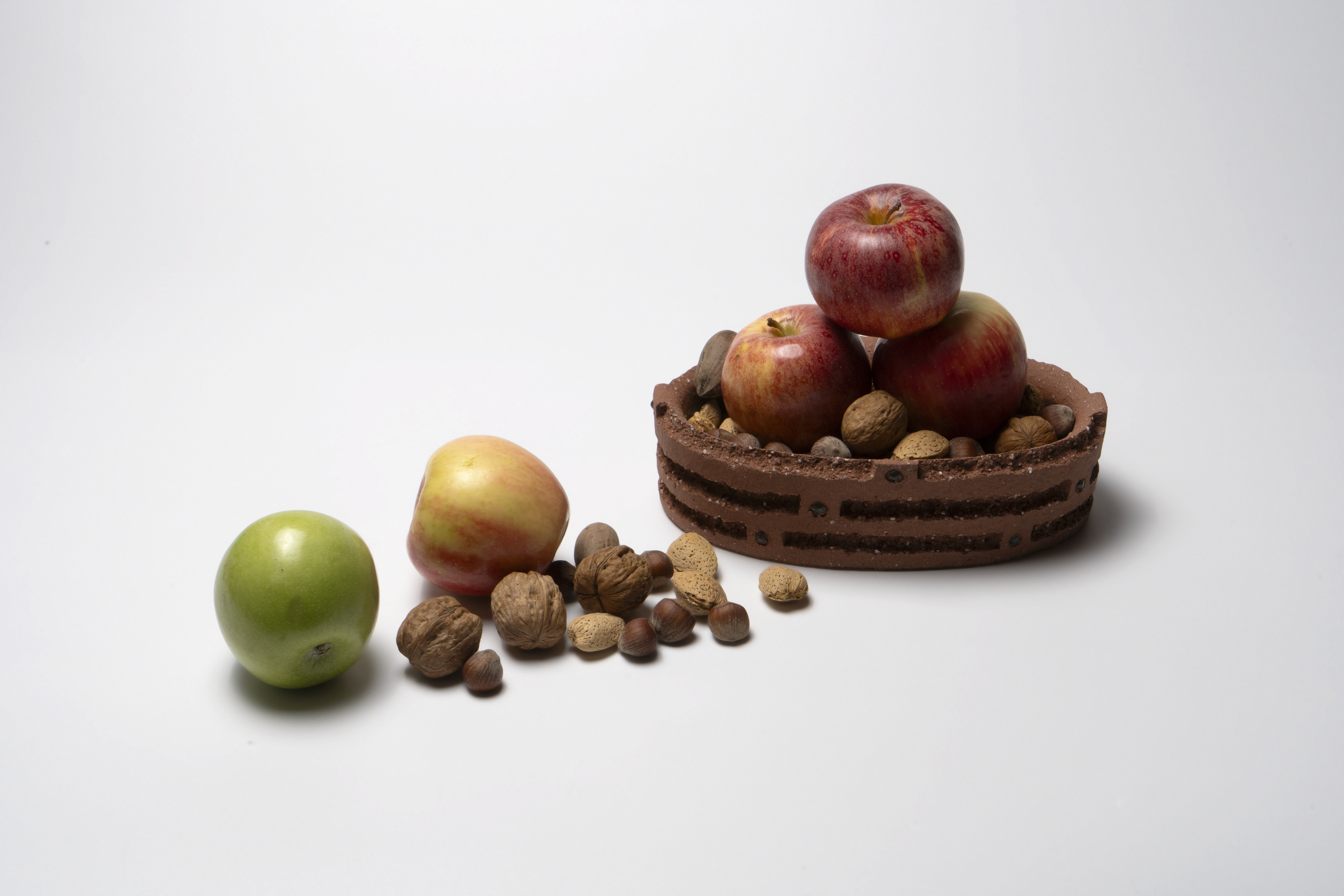
Kamoda Taizo 加守田 貞三, Bowl, with signed wood box, signed artist mark at base; Stoneware; 2 9/16 × 9 3/16 × 5 13/16 in. (6.5 × 23.4 × 14.8 cm)
In kaiseki, the relationship between cuisine and vessel extends beyond the complementarity of individual dishes and objects. It is through their progression and combination that a holistic landscape of the season emerges at the table. Rooted in the traditions of the tea ceremony, this practice has evolved into a collaboration between chefs and artists, who use food and ceramics together to express the season and nourish both the body and the senses of the diner.
----
See this and more in our current exhibition, “The Art of Living,” celebrating Japanese Ceramics and Art for Dining, Kaiseki, and Chanoyu: https://www.daiichiarts.com/exhibitions/