-
Artworks
Suzuki Goro 鈴木五郎 Japanese, b. 1941
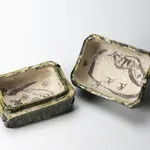
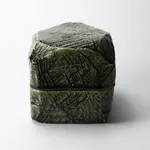
Oribe covered box, 1994Stoneware5 1/2 × 7 3/4 × 5 1/2 in. (14 × 19.7 × 14 cm)With signed wood boxFurther images
-
(View a larger image of thumbnail 1
)

-
(View a larger image of thumbnail 2
)

-
(View a larger image of thumbnail 3
)

-
(View a larger image of thumbnail 4
)
-
(View a larger image of thumbnail 5
)

-
(View a larger image of thumbnail 6
)

-
(View a larger image of thumbnail 7
)

-
(View a larger image of thumbnail 8
)

-
(View a larger image of thumbnail 9
)

-
(View a larger image of thumbnail 10
)

-
(View a larger image of thumbnail 11
)

-
(View a larger image of thumbnail 12
)

-
(View a larger image of thumbnail 13
)

-
(View a larger image of thumbnail 14
)
-
(View a larger image of thumbnail 15
)

-
(View a larger image of thumbnail 16
)

Suzuki Goro (b. 1941)’s is a contemporary ceramic artist based in Seto. His work is celebrated by collectors, makers, and artists around the world. His Mino wares, comprising Oribe, Shino,...Suzuki Goro (b. 1941)’s is a contemporary ceramic artist based in Seto. His work is celebrated by collectors, makers, and artists around the world. His Mino wares, comprising Oribe, Shino, Kiseto glazed pieces can be found in numerous public and private collections, including the Metropolitan Museum of Art, the Museum of Fine Arts in Boston, and many others.
The artist’s swift, playful, and skilled glazing and hand-building techniques shine through in this distinctive Oribe-glazed box. Inside, a delightful surprise of iron-underglaze drawing showing flowers and calligraphic abstract imagery awaits. The work is full of whimsy, with thoughtful and delightful decisions that give it a lighthearted character and candid presence. The distinctive green glaze of Oribe ware holds a unique place in Japanese ceramics, originating in the 17th century and largely produced in the Mino region.
-
(View a larger image of thumbnail 1
)


