


Miyanohara Ken 宮之原 謙 Japanese, 1898-1977
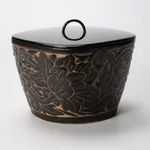
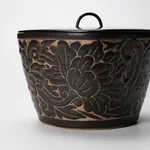
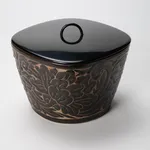
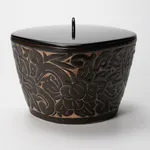
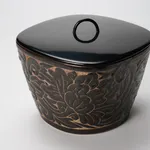
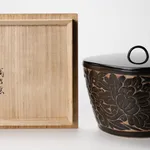
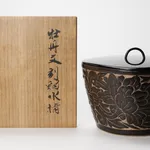
Wood storage box inscribed: Botan-mon kokuyū mizusashi 牡丹文刻釉水指 (Water jar with engraved peony patterns); signed: Fuchikuyō 富竹窯 (Fuchiku Kiln), Ken 謙; sealed: Ken 謙
Similar work: Philadelphia Museum of Art, a mizusashi with grape vines in the same technique, exhibited at the 15th Gotō Ten exhibition, 1965
Further images
-
(View a larger image of thumbnail 1
)
-
(View a larger image of thumbnail 2
)

-
(View a larger image of thumbnail 3
)
-
(View a larger image of thumbnail 4
)
-
(View a larger image of thumbnail 5
)

-
(View a larger image of thumbnail 6
)

-
(View a larger image of thumbnail 7
)

-
(View a larger image of thumbnail 8
)

-
(View a larger image of thumbnail 9
)

-
(View a larger image of thumbnail 10
)
-
(View a larger image of thumbnail 11
)

-
(View a larger image of thumbnail 12
)
-
(View a larger image of thumbnail 13
)
-
(View a larger image of thumbnail 14
)

-
(View a larger image of thumbnail 15
)
-
(View a larger image of thumbnail 16
)
-
(View a larger image of thumbnail 17
)

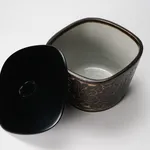
For this mizusashi, a hot-water container used in the tea ceremony, Miyanohara drew inspiration from the carved and inlaid floral designs found on Chinese Cizhou-style stoneware. The vessel was first covered with a thick brown glaze, then carved and scraped back to the clay body to create the peony motif. The design is simple and bold, appearing in silhouette, with vines and leaves encircling the vessel and standing out against the matte surface of the lighter, beige-toned clay.
Celebrated among connoisseurs of ceramics in Japan, Miyanohara Ken (1898–1977) was born in Kagoshima but was active among modernist Tokyo ceramic circles. He was the peer of celebrated potter Yasuhara Kimei, as a student under the same ceramic master (Itaya Hazan and Miyagawa Kozan). He demonstrated a high level of technical rigor and a modern design sensibility in vessel art. Inspired deeply while apprenticing under Itaya, he excelled in slip inlay, carving, and complex glazes, bridging continental ceramic traditions with contemporary abstraction. His work, influenced by European art, particularly French Art Nouveau, earned him major recognition at the Nitten exhibitions and the Japan Art Academy Award.