


Hachiya Sōyu 蜂谷宗由
H7 × Dia 7.5 cm
Further images
-
(View a larger image of thumbnail 1
)
-
(View a larger image of thumbnail 2
)

-
(View a larger image of thumbnail 3
)

-
(View a larger image of thumbnail 4
)

-
(View a larger image of thumbnail 5
)
-
(View a larger image of thumbnail 6
)

-
(View a larger image of thumbnail 7
)

-
(View a larger image of thumbnail 8
)

-
(View a larger image of thumbnail 9
)

-
(View a larger image of thumbnail 10
)

-
(View a larger image of thumbnail 11
)

-
(View a larger image of thumbnail 12
)

-
(View a larger image of thumbnail 13
)

-
(View a larger image of thumbnail 14
)

-
(View a larger image of thumbnail 15
)

-
(View a larger image of thumbnail 16
)

-
(View a larger image of thumbnail 17
)

-
(View a larger image of thumbnail 18
)

-
(View a larger image of thumbnail 19
)

-
(View a larger image of thumbnail 20
)
-
(View a larger image of thumbnail 21
)

Kōdō 香道, often translated as “The way of fragrance,” is known as one of three classical Japanese arts of refinement for the Japanese tea ceremony (sadō). Codified during the Muromachi period, Kōdō is both an aesthetic pursuit and a meditative discipline.
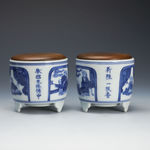
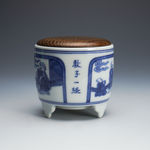
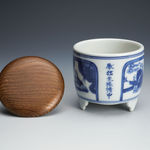
Fragrance games such as kumikō are incorporated into Kōdō and the Japanese tea ceremony to cultivate the tea guest’s ability to “listen to the fragrance.” These games use porcelain containers called kikikōro with high walls designed to hold and present the incense, as exemplified by the two following floating tripod sometsuke kikikōro by the celebrated Showa-era incense master Hachiya Sōyu (1902-1988) from the Shino-ryu school of incense.
By “listening to the fragrance,” practitioners shift their consciousness into how the space is shaped by fragrance, preparing the mind to enter the tea room.