


Koie Ryoji 鯉江 良二 Japanese, 1938-2020
Further images
-
(View a larger image of thumbnail 1
)

-
(View a larger image of thumbnail 2
)

-
(View a larger image of thumbnail 3
)

-
(View a larger image of thumbnail 4
)

-
(View a larger image of thumbnail 5
)

-
(View a larger image of thumbnail 6
)

-
(View a larger image of thumbnail 7
)

-
(View a larger image of thumbnail 8
)

-
(View a larger image of thumbnail 9
)

-
(View a larger image of thumbnail 10
)

-
(View a larger image of thumbnail 11
)
-
(View a larger image of thumbnail 12
)

Born in Tokoname, one of Japan’s Six Ancient Kilns, Koie Ryoji (1938–2020) was one of the most influential figures in contemporary Japanese ceramics. Deeply rooted in the traditions of Tokoname ware, he continually pushed the boundaries of the medium through bold experimentation and a profound engagement with international modernism.
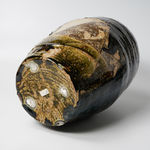
This powerful Oribe jar exemplifies the energy and freedom that define Koie’s mature work. Formed from Tokoname’s characteristic sandy clay, the vessel is animated by sweeping incised lines that create a rhythmic geometric framework across its surface. Layers of rich green and black Oribe glaze cascade over the form, producing a dramatic interplay of color, texture, and movement.
The work reveals Koie’s remarkable ability to balance spontaneity with control. The flowing glaze appears almost accidental, yet every element is carefully orchestrated, creating a surface that feels both painterly and sculptural. The substantial scale of the vessel further amplifies its presence, making it a commanding example of the artist’s celebrated oeuvre.
Signed Ryo (良) near the base, the jar embodies the qualities that have made Koie one of the most sought-after figures in contemporary Japanese ceramics: a profound respect for tradition coupled with an unwavering spirit of innovation. Both powerful and refined, it stands as an exceptional example of Koie’s enduring contribution to the evolution of modern Japanese ceramics.